
Surge Protective Devices (SPDs) are essential for safeguarding electrical equipment from transient overvoltages caused by lightning strikes, switching operations, and electromagnetic interference. This article explores the working principles, benefits, installation guidelines, and industry applications of SPDs in solar and wind power systems, featuring Wzonpa’s high-quality solutions.
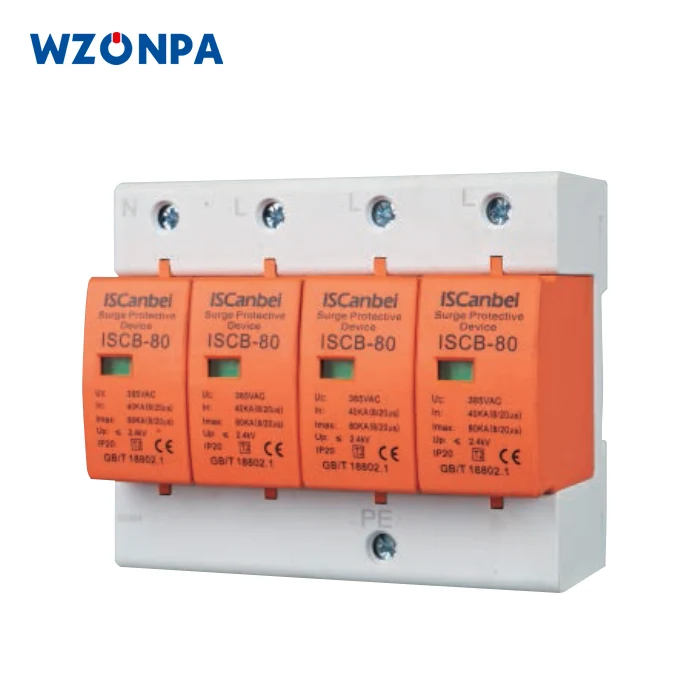
Table of Contents
What Is a Surge Protective Device?
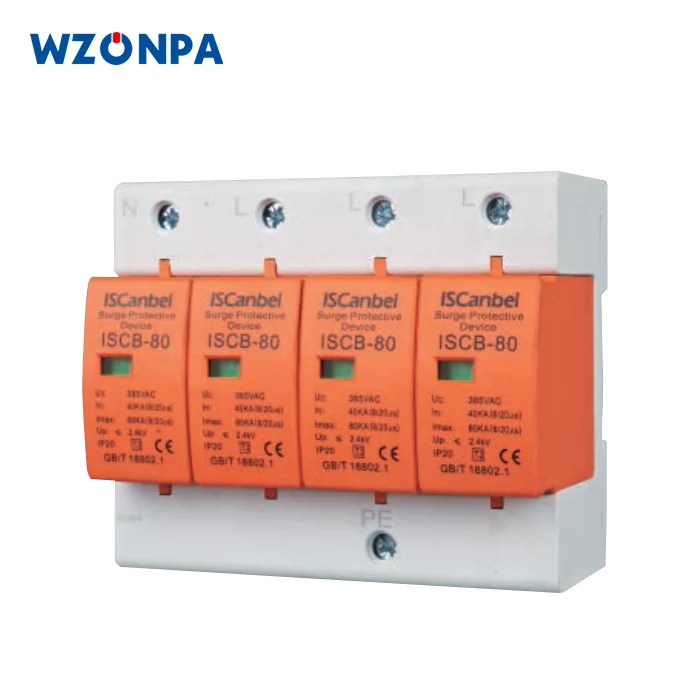
A Surge Protective Device (SPD) is an electrical device designed to protect sensitive equipment from voltage spikes caused by lightning, switching, and other transient events. SPDs operate by diverting surge currents away from critical circuits, maintaining system integrity and preventing damage.
How Does a Surge Protective Device Work?
SPDs function by detecting sudden voltage increases and channeling excess energy to the ground. Wzonpa SPDs employ high-energy metal oxide varistors (MOVs) with thermal disconnectors to suppress both common-mode and differential-mode surges. In solar and wind power systems, SPDs are installed at strategic locations:
- Solar array input side: intercepts lightning-induced surges.
- Inverter/converter terminals: mitigates internally generated transients.
This multi-stage protection ensures the system operates safely and prolongs equipment life.
Types of Surge Protective Devices
| Type | Description | Typical Rating |
|---|---|---|
| Type 1 | Primary protection for direct lightning strikes at service entrance | 15kA / 25kA / 50kA per pole |
| Type 2 | Secondary protection for internal surges, often installed after main panels | 40kA / 80kA / 100kA |
| Type 3 | Point-of-use protection for sensitive electronics | 5kA / 10kA |
Installation Guidelines in Solar and Wind Systems
Proper installation is crucial to maximize SPD performance:
- Mount SPDs on 35mm DIN rails in AC/DC panels.
- Ensure galvanic isolation between protected and surge-dissipating circuits.
- Use multi-stage SPDs to discharge partial lightning currents effectively.
- Install mechanical or remote indicators for real-time status monitoring.
Benefits of Using a Surge Protective Device
- Extends equipment service life by up to 300%
- Reduces downtime and maintenance costs
- Protects against lightning, switching surges, and electromagnetic interference
- Ensures compliance with IEC 61643 standards
- Enhances safety in solar farms, wind turbines, and battery storage facilities
Wzonpa SPD Solutions
Wzonpa offers advanced SPDs engineered for renewable energy applications. Their key features include:
- Dynamic voltage clamping with nanosecond response
- Coordinated let-through energy management across SPD cascades
- Environmental hardening for extreme temperatures (-40°C to +85°C)
- Real-time status monitoring via mechanical and remote indicators
- Modular DIN-rail integration for easy maintenance
For more information, visit Wzonpa Surge Protective Devices.
FAQ
Q1: Can SPDs protect against all types of surges?
A1: SPDs primarily protect against transient overvoltages from lightning and switching. Combining Type 1, Type 2, and Type 3 SPDs provides comprehensive coverage.
Q2: How often should SPDs be replaced?
A2: SPDs should be inspected regularly. Replacement is required if MOVs or indicators show fault conditions.
Q3: Are Wzonpa SPDs suitable for large-scale solar farms?
A3: Yes, Wzonpa SPDs are specifically designed for utility-scale solar and wind power applications.
Conclusion & Contact
Installing a Surge Protective Device is vital for the safety and longevity of solar and wind power systems. Wzonpa SPDs offer reliable, high-performance protection tailored for renewable energy applications.
For tailored solutions and inquiries, contact us today and ensure your systems are fully safeguarded.