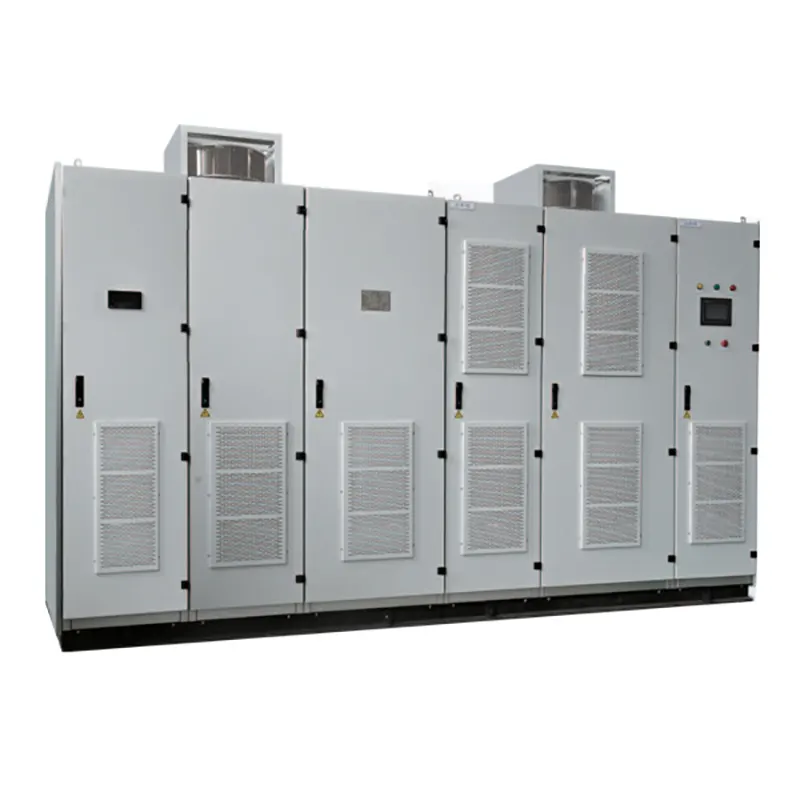

A GCK Low-Voltage Withdrawable Switchgear Assembly is designed to distribute electrical power and support motor control through a cabinet system with removable functional units. This guide explains how the equipment works, its main components, practical applications, selection criteria, safety considerations, and maintenance requirements. It also highlights the questions buyers should ask before specifying a switchgear assembly for an industrial or commercial project.
Choosing the right low-voltage switchgear is about more than meeting a rated current. Electrical engineers, project contractors, facility managers, and procurement teams must also consider operational continuity, short-circuit protection, installation space, maintenance access, and long-term operating costs.

A GCK Low-Voltage Withdrawable Switchgear Assembly is a metal-enclosed electrical distribution and control system designed to manage low-voltage power circuits. It commonly uses modular drawer-type functional units, allowing individual outgoing circuits or motor-control units to be isolated and withdrawn for inspection or maintenance in accordance with the equipment's design.
The assembly is typically used in three-phase AC electrical systems to distribute power, protect outgoing circuits, and control motors and other electrical loads. Depending on the project, a complete lineup may incorporate incoming feeders, bus couplers, outgoing distribution circuits, and motor-control units.
Unlike a simple distribution cabinet containing only fixed components, a withdrawable design organizes selected electrical devices into removable functional units. This arrangement can make circuit servicing and equipment replacement more convenient, especially in facilities with many independent feeders.
GCK configurations are commonly associated with two functions:
A project may require one function or a combination of both. The appropriate arrangement depends on the single-line diagram, load schedule, operating strategy, and maintenance requirements.
A GCK assembly receives electrical power through an incoming circuit and distributes it through a busbar system to individual outgoing functional units. Circuit breakers, contactors, protective relays, and associated control components perform different roles depending on the selected circuit arrangement.
The withdrawable mechanism is especially useful when a particular circuit needs inspection, testing, or replacement. However, withdrawing a unit does not automatically make every part of the assembly safe to touch. Incoming terminals, adjacent circuits, and busbar compartments may remain energized.
For this reason, safe operation depends on properly designed interlocks, correct isolation procedures, appropriate protective equipment, and work performed by qualified personnel.
Understanding the principal components helps buyers evaluate technical proposals, identify maintenance requirements, and compare configurations from different suppliers.
| Component | Primary Function | What Buyers Should Verify |
|---|---|---|
| Cabinet enclosure | Houses electrical equipment and provides the specified mechanical and environmental protection. | Dimensions, material, corrosion protection, accessibility, and IP rating. |
| Main busbars | Carry and distribute incoming electrical power. | Rated current, conductor material, temperature-rise performance, and short-circuit withstand rating. |
| Withdrawable functional units | Contain selected switching, protection, and control devices in removable modules. | Unit rating, compatibility, mechanical operation, and interlocking arrangements. |
| Circuit breakers | Switch circuits and interrupt specified fault currents. | Rated current, breaking capacity, trip characteristics, and coordination. |
| Contactors and motor protection | Control motor operation and provide the specified overload or fault protection in the complete circuit. | Motor rating, starting method, duty, and protection settings. |
| Control and monitoring devices | Support local operation, status indication, measurement, and optional remote control. | Control voltage, communication requirements, and monitoring functions. |
| Interlocks and earthing provisions | Help prevent specified unsafe operating sequences and support protective earthing. | Interlock logic, earthing continuity, and applicable safety requirements. |
The exact bill of materials depends on the electrical scheme. A feeder serving a lighting distribution panel, for example, may need a different arrangement from a motor circuit controlling a high-inertia industrial machine.
In a facility with numerous independent loads, servicing a fixed-mounted device can require more extensive access work or a longer shutdown, depending on the board's arrangement. A withdrawable functional unit can simplify the isolation and replacement process for compatible circuits.
This benefit is valuable where maintenance teams need predictable service procedures and the plant has limited opportunities for planned outages. It does not eliminate downtime, but it can help make individual circuit maintenance more manageable.
Modular functional units help engineers organize feeders according to the project's load schedule. This can make the overall arrangement easier to understand and support future planning when spare space and compatible modules have been included from the beginning.
Dedicated functional units can make it easier to identify, inspect, test, or replace individual circuit equipment. Clear labeling, accessible test points, and consistent documentation further improve maintenance efficiency.
When properly specified, the assembly brings switching, distribution, and control equipment together in a coordinated cabinet system. This helps electrical teams manage multiple loads through a defined distribution architecture.
GCK low-voltage switchgear is commonly applied in industrial and commercial electrical distribution systems where multiple outgoing circuits, motor loads, or organized feeder control are required.
Suitability must be confirmed for the actual installation. Environments with conductive dust, corrosive substances, high humidity, extreme temperatures, or explosion hazards may require special engineering measures or a different equipment solution.
The most common procurement problem is receiving a quotation based on incomplete electrical information. A cabinet may appear suitable by voltage and current alone while failing to meet the project's fault level, motor starting requirements, enclosure protection, or installation constraints.
| Selection Factor | Questions to Answer | Why It Matters |
|---|---|---|
| System voltage and frequency | What are the nominal voltage, frequency, and earthing arrangement? | Ensures compatibility with the power system and connected equipment. |
| Rated current | What are the maximum demand, feeder currents, and load characteristics? | Helps establish appropriate busbar and circuit ratings. |
| Short-circuit performance | What prospective fault current is available at the installation point? | Determines the required withstand and protective-device capabilities. |
| Functional-unit arrangement | How many outgoing feeders and motor circuits are required? | Defines the cabinet layout, drawer sizes, and space allocation. |
| Motor starting and control | Are direct-on-line, star-delta, soft-starter, or variable-frequency-drive arrangements needed? | Influences component selection, heat dissipation, and control design. |
| Environmental protection | What are the ambient conditions, dust levels, humidity, and installation location? | Helps determine enclosure protection and special design requirements. |
| Future expansion | Will spare feeders, drawers, or additional sections be needed later? | Reduces the risk of costly modifications as demand grows. |
| Standards and documentation | Which standards and project-specific tests are required? | Supports technical approval, installation, commissioning, and compliance review. |
Before approving a purchase, request the following information where applicable:
For international projects, confirm the required edition of the applicable standards and the documentation accepted in the destination market. IEC 61439 is an important reference for low-voltage switchgear and controlgear assemblies; the relevant parts and verification requirements should be agreed upon for the specific project.
The main distinction is how the functional equipment is mounted and accessed. In a fixed-type assembly, major switching or control devices are installed in fixed positions. In a withdrawable assembly, designated functional units can be moved between specified operating positions using the designed mechanism.
| Comparison Point | Withdrawable Switchgear | Fixed Switchgear |
|---|---|---|
| Functional-unit access | Removable units support designated isolation and maintenance procedures. | Devices remain fixed in their installed positions. |
| Unit replacement | Can be convenient when replacement units are compatible and available. | May require more component-level disassembly. |
| Initial investment | May be higher because of the withdrawal mechanism and unit structure. | May be more economical for simpler distribution needs. |
| Space and layout | Depends on drawer design, compartment layout, and required clearances. | Depends on fixed device arrangement and enclosure design. |
| Best-fit consideration | Useful where maintainability and functional-unit access are important. | Useful where a simpler arrangement meets operating requirements. |
Neither arrangement is automatically superior in every application. A project with critical motor loads and frequent maintenance interventions may benefit from withdrawable units, while a smaller facility with straightforward feeders may prioritize the lower complexity of a fixed design.
Safe switchgear operation depends on the complete electrical design, the quality of assembly, appropriate protection settings, correct installation, and disciplined operating procedures.
Circuit breakers, overload protection, and other protective devices should be selected and coordinated according to the system fault study and load characteristics. A suitable rated current alone does not demonstrate that a device can safely interrupt the prospective fault current.
Mechanical and electrical interlocks should function as designed. Protective earthing connections must be installed and verified, and operating procedures must address isolation, testing for absence of voltage, and any required lockout/tagout measures.
An IP rating describes specified protection against access and ingress of solid objects and water under defined test conditions. It does not, by itself, establish corrosion resistance, explosion protection, or suitability for every industrial environment.
For new projects, confirm the applicable low-voltage assembly standard, including relevant requirements under IEC 61439 where specified. Request appropriate design verification and routine verification documentation from the manufacturer. Do not assume that every product carrying the GCK designation has the same certification or test scope.
A preventive maintenance plan helps identify deterioration before it develops into an operational problem. The inspection interval should be based on the manufacturer's instructions, operating conditions, equipment criticality, and applicable regulations.
| Observed Problem | Possible Causes | Recommended Response |
|---|---|---|
| Abnormal heating | Loose connections, excessive loading, poor contact condition, or inadequate ventilation. | Have qualified personnel investigate loading, connections, and thermal conditions. |
| Difficulty moving a drawer | Mechanical misalignment, wear, contamination, or damaged components. | Follow the manufacturer's isolation and inspection procedure; do not force the mechanism. |
| Repeated protective trips | Overload, short circuit, incorrect settings, or equipment faults. | Identify the root cause before restoring the circuit; do not repeatedly reset without investigation. |
| Moisture or corrosion | Condensation, unsuitable environmental protection, or damaged enclosure seals. | Assess the source of moisture and correct the environmental or enclosure problem. |
| Inconsistent control operation | Control-power issues, wiring faults, failed components, or incorrect settings. | Inspect the control circuit and verify the approved schematic and settings. |
Maintenance should never be reduced to a generic calendar checklist. Equipment operating under heavy loads, frequent switching, vibration, or harsh environmental conditions may need a different inspection strategy from equipment in a clean, controlled electrical room.
A competitive quotation should be supported by technical clarity, not just a product name and a price. Differences in busbar ratings, breaker models, functional-unit construction, enclosure protection, and verification documentation can significantly affect the final solution.
When evaluating a GCK switchgear supplier, consider these questions:
Buyers should also clarify the scope of supply. Confirm whether the quotation includes internal wiring, control devices, metering, documentation, spare parts, factory testing, and any requested site services. Clear responsibilities help reduce unexpected costs and commissioning delays.
Wenzhou Wzonpa Import and Export Co., Ltd. is the company name buyers can use when discussing their switchgear sourcing requirements. For a project-specific inquiry, provide the operating voltage, rated current, circuit list, application, required standards, and delivery destination so that the appropriate product information and configuration can be reviewed.
GCK is a designation used for a type of low-voltage withdrawable switchgear assembly. The exact model coding and configuration should be confirmed with the individual manufacturer because naming conventions and product details can vary.
Its primary purpose is to distribute low-voltage electrical power and support the switching, protection, and control of outgoing circuits. Depending on the configuration, it can serve general power distribution or motor-control applications.
Yes. GCK assemblies are commonly configured as motor control centers for compatible pumps, fans, compressors, conveyors, and other industrial machinery. The motor ratings, starting method, protection, and control requirements must be checked for each application.
No. Withdrawable functional units can simplify selected maintenance and replacement tasks, but they do not guarantee uninterrupted operation. Downtime still depends on the circuit arrangement, isolation requirements, fault conditions, spare-unit availability, and site procedures.
The appropriate rating depends on the calculated load, maximum demand, load growth, conductor and busbar design, ambient conditions, and relevant project requirements. Engineers should also verify short-circuit withstand capability and protective-device coordination instead of selecting a rating from current demand alone.
The applicable requirements depend on the destination market and project specification. IEC 61439 and relevant national standards may apply to low-voltage assemblies. Buyers should confirm the required standard edition, verification scope, and documentation with the supplier and responsible project engineer.
Available options depend on the manufacturer's design and product range. Cabinet dimensions, incoming and outgoing cable arrangements, functional-unit combinations, metering, and control features should be confirmed before an order is finalized. Any changes must preserve the required electrical ratings and verified design.
Prepare the system voltage and frequency, rated current, single-line diagram, number and type of outgoing circuits, motor data, prospective short-circuit current, enclosure protection requirements, applicable standards, installation conditions, and delivery destination. The more complete the information, the easier it is to evaluate a technically appropriate proposal.
Selecting the right GCK Low-Voltage Withdrawable Switchgear Assembly can help create a more maintainable and well-organized electrical distribution system. The key is to match the equipment configuration with actual load requirements, protection needs, installation conditions, and long-term maintenance plans.
Wenzhou Wzonpa Import and Export Co., Ltd. welcomes inquiries from electrical contractors, industrial buyers, project developers, and international distributors seeking switchgear product information and sourcing support.
Have a project specification or need help identifying the right configuration? Please contact us with your technical requirements to discuss suitable options, request product details, and clarify the documentation needed for your project.