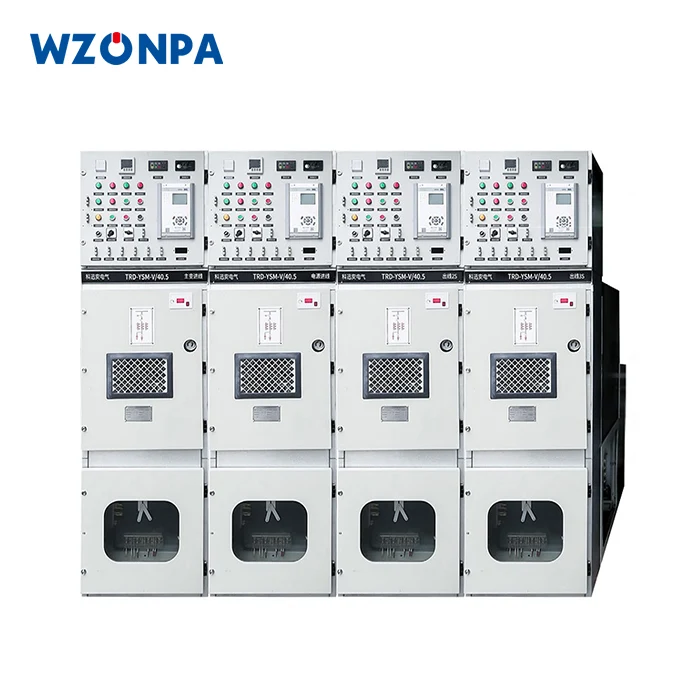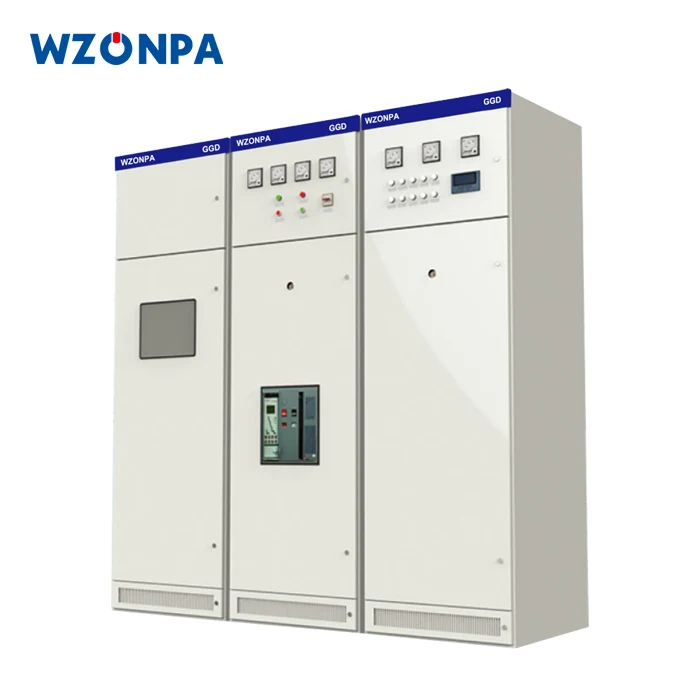

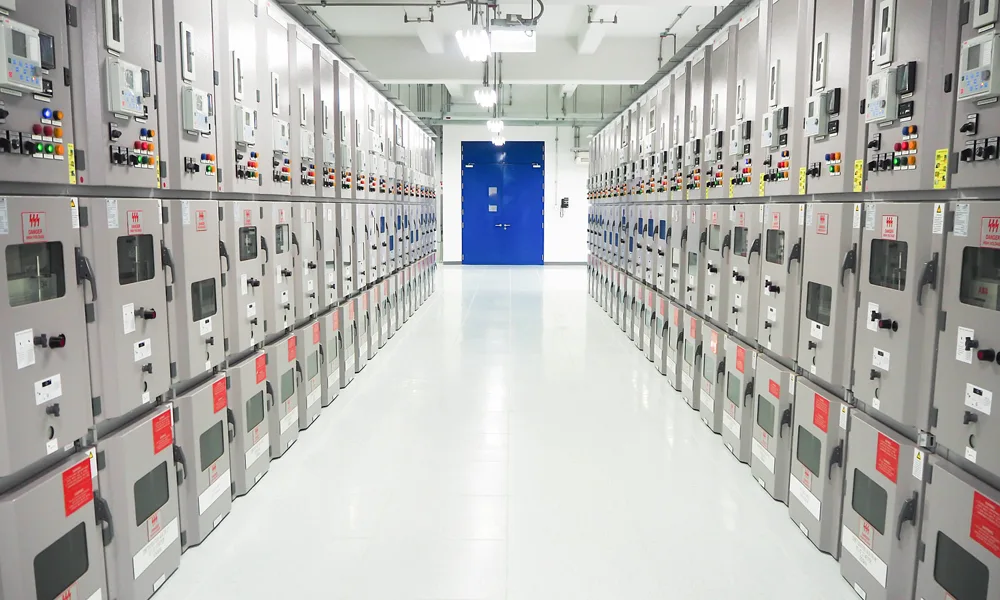
Medium-Voltage Withdrawable Metal-Clad Switchgear, commonly known as a Withdrawable Switchgear Assembly or simply "Withdrawable Switchgear," is a type of factory-assembled, compartmentalized metal-enclosed switchgear for medium-voltage (MV) electrical distribution systems. Its defining characteristic is that the primary functional components, most critically the circuit breaker, are mounted on a removable chassis (truck or cradle). This chassis can be safely inserted ("connected"), withdrawn ("disconnected"), or fully removed ("isolated") from its compartment within the enclosure while the rest of the system remains energized, enabling maintenance, testing, or replacement with minimal downtime and enhanced operator safety.
The core operational principle revolves around the withdrawable element. The circuit breaker truck houses the main interrupting device and its operating mechanism. It features primary disconnecting contacts (stabs) and secondary control contacts. During operation:
1.Insertion/Racking-In: The truck is maneuvered into its compartment. Primary stabs engage with fixed busbar and cable/load contacts within the compartment, establishing the main current path. Secondary control contacts simultaneously engage, connecting control, protection, and monitoring circuits.
2.Operation: Once fully inserted and secured (often in the "Service" or "Connected" position), the circuit breaker functions like any other, controlled by protective relays to open or close the circuit under normal or fault conditions.
3.Withdrawal/Racking-Out: To isolate the circuit, the breaker is first opened. The truck is then moved to the "Test" or "Disconnected" position, physically separating the primary stabs from the busbar and cable contacts while maintaining secondary control connections. This allows safe testing of control/protection circuits. Further movement to the "Withdrawn" or "Isolated" position completely disengages both primary and secondary contacts, enabling safe removal of the truck from the compartment for servicing, while the busbars and other feeder circuits remain live.
1.Indoor Installation: Primarily designed for indoor environments within buildings or dedicated substations.
2.Ambient Conditions: Standard operating temperature range typically -5°C to +40°C. Humidity controlled per IEC 62271-1 standards (e.g., average relative humidity ≤ 95%, non-condensing).
3.Altitude: Generally rated for installations up to 1000 meters above sea level. Derating may apply at higher altitudes.
4.Pollution Degree: Designed for environments classified as Pollution Degree 2 or 3 per IEC 60815.
5.Seismic: Can be designed to withstand specified seismic activity levels (e.g., Zone 2, 3, or 4 per relevant standards).
Withdrawable Switchgear is fundamental in MV Switvhgear, widely used in:
1.Primary and secondary electrical substations (utility, industrial, commercial).
2.Large industrial plants (manufacturing, petrochemical, mining, metals processing).
3.Large commercial complexes (data centers, hospitals, universities, shopping malls).
4.Power generation plants (for generator connection, auxiliary power).
5.Renewable energy plants (wind, solar substations).
6.Critical infrastructure facilities (airports, water treatment plants).
7.Any application requiring high reliability, safety during maintenance, and flexibility in circuit configuration.
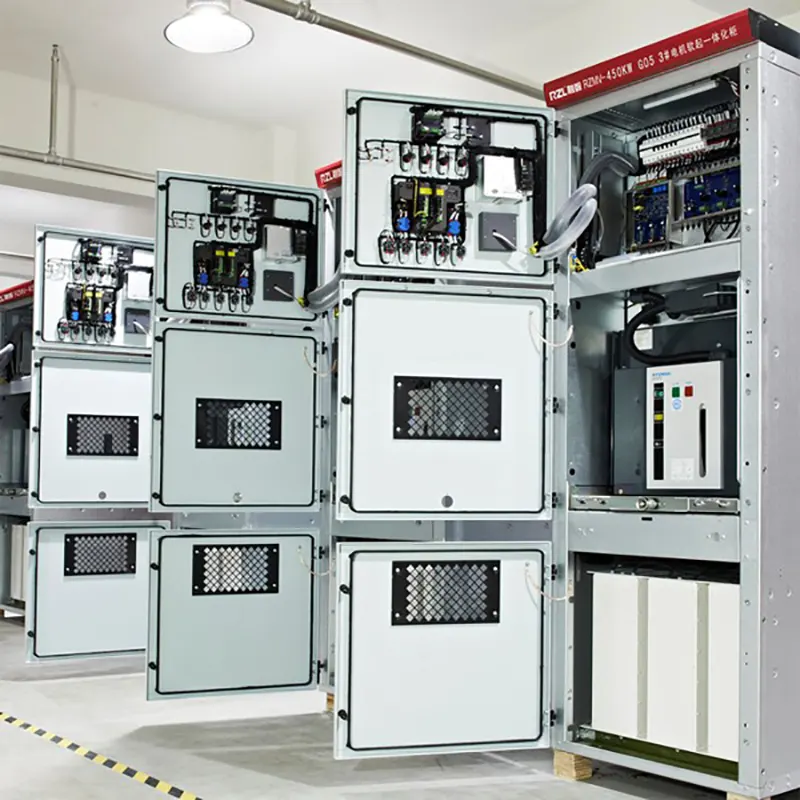
The enclosure is rigorously divided into separate, isolated metal compartments, each serving a specific function and enhancing safety:
1.Cable Compartment (Front or Rear): Houses the cable terminations (incoming/outgoing feeders). Contains cable support clamps, stress control cones/terminations, and often the cable earthing (grounding) switch. Provides access for cable installation and testing. Equipped with viewing windows or shutters for safety.
2.Circuit Breaker Compartment: The central chamber is designed to accept the withdrawable circuit breaker truck. Contains the guide rails, primary contact clusters (busbar side and cable side), shutters/barriers that automatically cover live contacts when the breaker is withdrawn, racking mechanism (manual or motorized), and position indicators (Connected, Test, Disconnected, Withdrawn). Safety interlocks are integral to this compartment.
3.Busbar Compartment: Encloses the main horizontal and vertical busbars running through the switchgear assembly, distributing power between sections/cells. Rigidly isolated from other compartments to contain arcs and prevent phase-to-phase faults. May include busbar supports and potential transformers (PTs).
4.Low-Voltage/Control Compartment: Separately houses the secondary control, protection, and monitoring equipment. This includes protective relays, meters, control switches, fuses, terminal blocks, communication modules, and the control power supply (e.g., DC battery charger). Ensures protection devices are isolated from primary circuit hazards.
5.(Optional) Voltage Transformer (VT) Compartment: A dedicated compartment, often integrated with the busbar compartment or as a separate section, housing voltage transformers for metering and protection.
1.Enhanced Safety: Compartmentalization isolates arcs; automatic shutters cover live contacts; comprehensive mechanical and electrical interlocks prevent unsafe operations (e.g., racking under load, opening doors on live compartments, closing earthing switch on live bus).
2.High Reliability: Robust construction, use of high-quality components, and strict quality control ensure dependable operation.
3.Operational Flexibility & Reduced Downtime: The withdrawable breaker allows rapid isolation, testing (in Test position), and replacement without de-energizing the entire switchboard or adjacent feeders.
4.Ease of Maintenance: Components are readily accessible; the breaker truck can be easily removed for servicing off-site.
5.Modular Design: Standardized cells allow for flexible configurations and future expansion.
6.Versatility: Accommodates various circuit breaker technologies (Vacuum, SF6), protection schemes, and monitoring systems.
7.Arc Resistance (Optional): Can be designed to contain internal arcing faults (IEC 62271-200), directing blast and hot gases safely away from personnel.
8.Standard Compliance: Manufactured to meet international standards (primarily IEC 62271-200, ANSI C37.20.2/3).
1.Rated Voltage: Standard system voltages include 12 kV, 15 kV, 17.5 kV, 24 kV, 36 kV (35 kV is a common system designation often covered by 36 kV rated equipment).
2.Rated Normal Current: Standardized ratings span a wide range, typically encompassing 630 A, 1250 A, 1600 A, 2000 A, 2500 A, 3150 A; Specific designs may cover higher or intermediate values.
3.Rated Short-Time Withstand Current (Icw): Common ratings include 25 kA RMS for 1s; 31.5 kA RMS for 1s; 40 kA RMS for 1s or 3s; higher ratings available.
4.Rated Peak Withstand Current (Ipk): Typically 2.5 times the Icw value (e.g., 63 kA peak; 80 kA peak; 100 kA peak).
5.Rated Short-Circuit Breaking Current (Isc): Matches or exceeds the Icw rating (e.g., 25 kA; 31.5 kA; 40 kA).
6.Rated Frequency: 50 Hz or 60 Hz.
7.Insulation Level: Defined by power frequency withstand voltage (e.g., 28 kV RMS for 12kV systems, 38 kV RMS for 24kV systems, 70 kV RMS for 36kV systems) and lightning impulse withstand voltage (e.g., 75 kV peak for 12kV, 95 kV peak for 24kV, 170 kV peak for 36kV) per IEC 62271-1.
8.Degree of Protection (IP Code): Typically IP4X for the enclosure (protection against solid objects >1mm) and IP2X for internal compartments (protection against finger contact). Higher protection (e.g., IP54) is available for specific environments.
9.Internal Arc Classification (Optional - IAC): Specified per IEC 62271-200 (e.g., IAC AFLR internal arc level, access type, duration).